
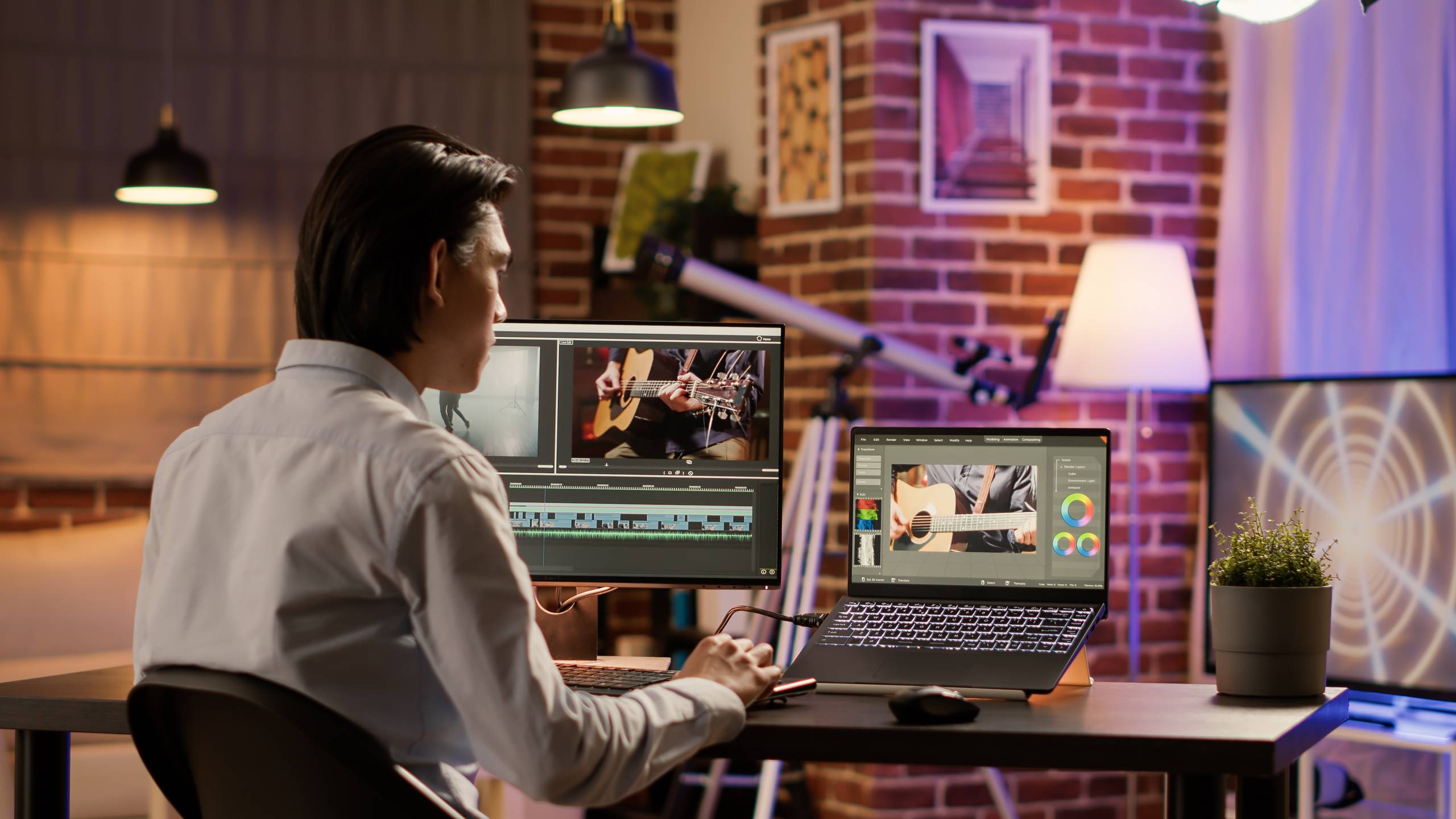
Pacing is one of the most underestimated editing techniques there is, but when used correctly, it can really control the audience’s experience of a scene. Whether it’s stretching out the tension before a dramatic climax, or rushing to cram in the maximum amount of content, pacing will help you decide how to measure out your visuals to achieve the desired effect. Pacing starts with the length of a shot. For instance, a long close-up will make you wait for a line of dialogue longer than if the editor had cut away quickly. An editor should carefully consider how long each shot should be, and how fast cuts should be, as much as they consider what should be in the shot in the first place. Cutting too quickly might give the audience a headache, while leaving a shot on for too long might bore them. Generally speaking, how long you should leave a cut running for is an innate skill that an editor will develop as they gain more experience.
One big factor for editing pace is the genre of the film. A thriller will often cut faster and faster to match the adrenaline levels as a scene reaches its climax, whereas a drama will cut slower to give breathing room to characters, to give breathing room to emotion. But a film can even start and stop itself depending on what the characters are trying to accomplish. A character that is figuring something out may see an edit filled with jump cuts, so once the piece falls into place, the editing becomes smooth again. This will keep the viewer on their toes, but more importantly, keep them interested.
This brings us to sound, because the relationship between sound and editing is, again, indivisible from considerations of pacing. Sound can slow down or speed up a scene, depending on how it’s used. Music can swell, to lengthen a moment; a sudden absence of sound can lengthen it as well. Quick cuts, accompanied by sharp sound effects or dialogue, will make an edit feel snappier. Music, ambience, foley — an editor will stack sound like instruments in a mix in order to produce a “sound edit” that jives with the “picture edit.” An editor might cut on a musical beat, for instance, or use room tone to carry through a slow section. When sound and picture are working well together, the pacing doesn’t feel artificially manipulated, and we ride along.
Here are a few ways that editors hone their sense of timing. Cutting the same scene with different lengths of cuts can give editors a sense of how time can affect impact: faster cuts in a scene might bring out the tension in an argument, while longer cuts might create a sense of warmth and companionship. Looking at the work of editors such as Thelma Schoonmaker or Walter Murch can also help editors develop an understanding of when to hold back and when to be braver. Practice on personal projects also helps: if a passage of time feels too long or too short, it probably is. Working with others can also help: I find that other people can point out timing issues that I don’t see after spending a lot of time with a project.
Because pacing is not just about the math, it’s also an emotional tongue, it’s the ability to bridge those patterns to an audience’s emotional center. And that’s the way in which you make your film come alive, make it breathe, make it pulse with life. And you can push that power and control of time even further once you understand how to work with pacing — that’s how you can extend a five-second scene to feel like an hour, or cut an hour down to five seconds. So the more you learn about pacing, the more you can wield the tool to do whatever you need.